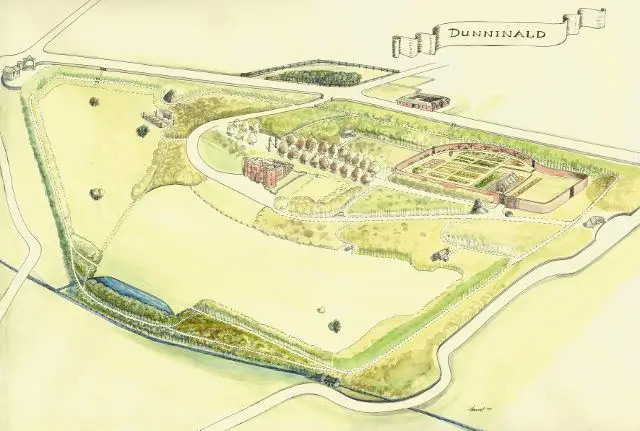
The ornamental grounds surrounding the house date back at least to 1750. They appear on General Roy’s Military Survey of Scotland, one of the earliest detailed maps of the country.
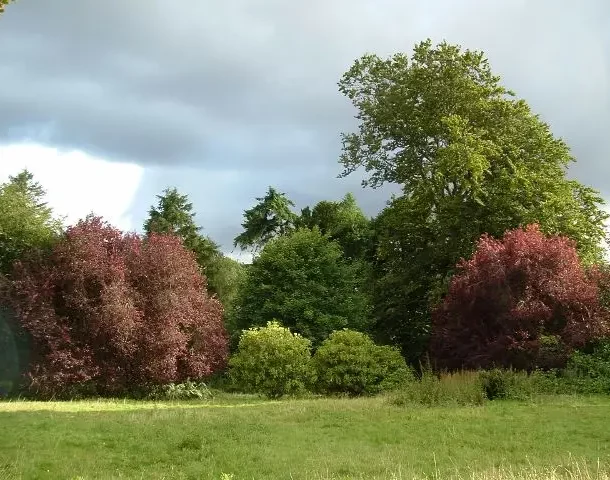
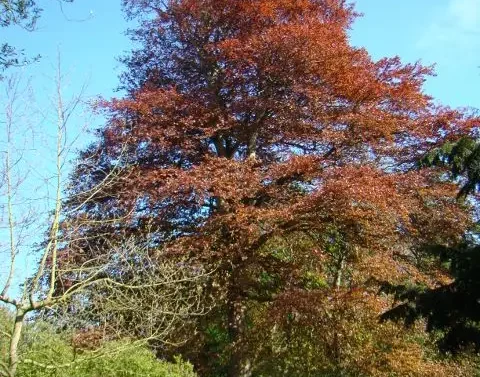
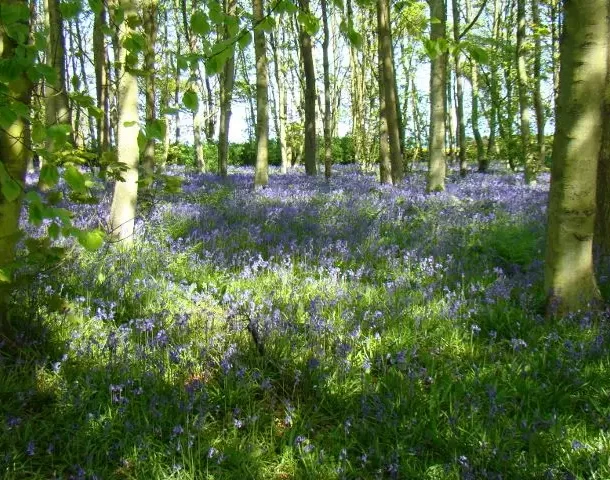
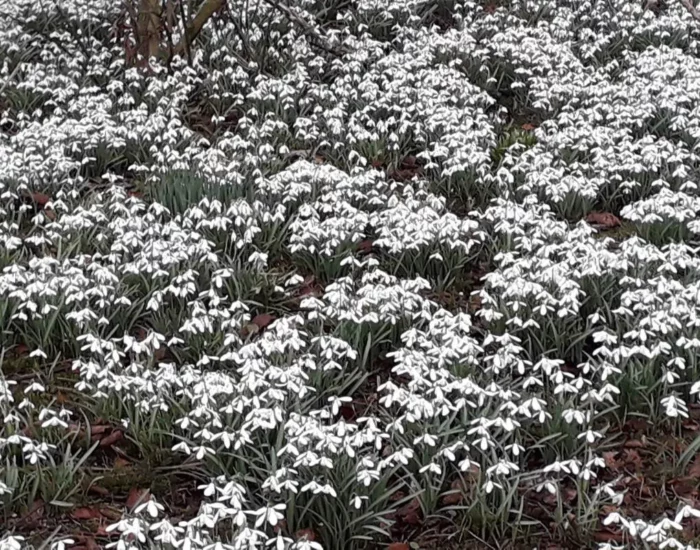
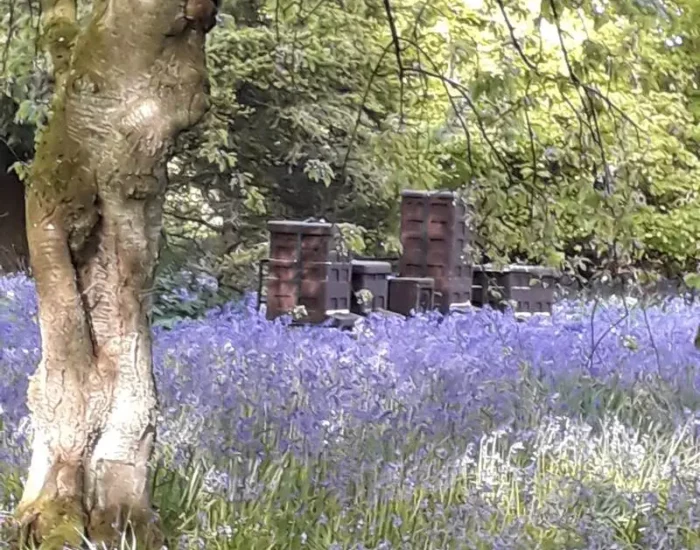
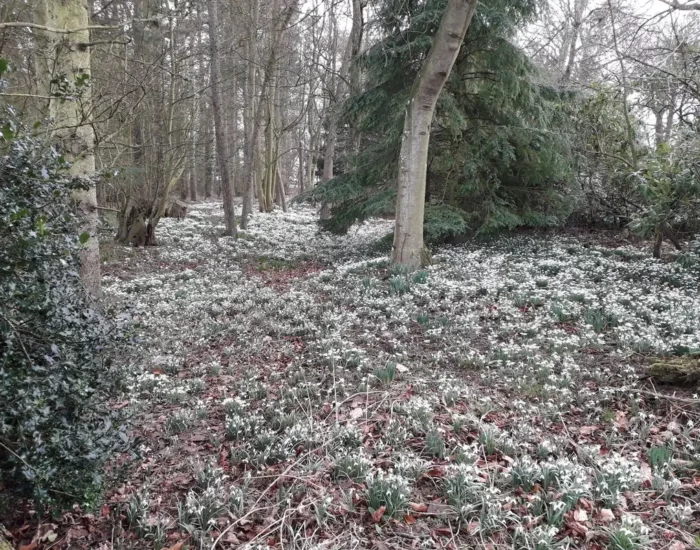
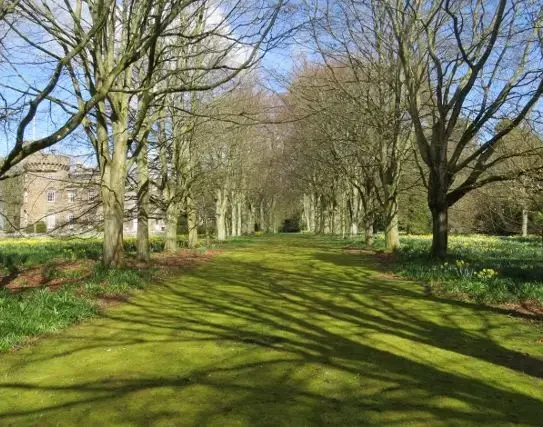
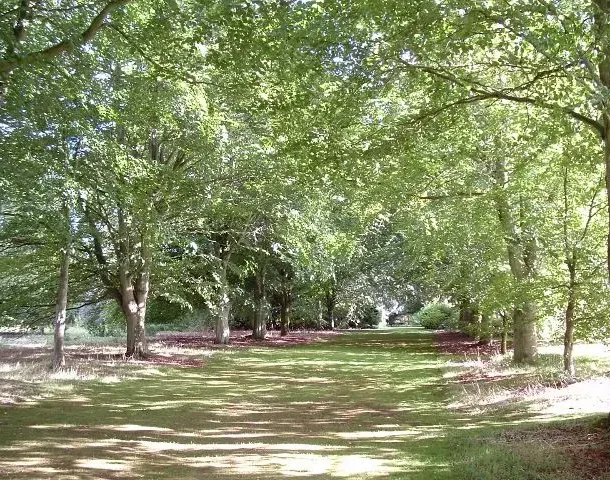
A beech avenue runs from behind the house down to the walled garden. Mature trees shelter the path in all weathers. In Spring, the ground is rich on either side with flowering bulbs. Snowdrops are first, followed by daffodils. May brings a spectacular carpet of bluebells that extends far into the woods.
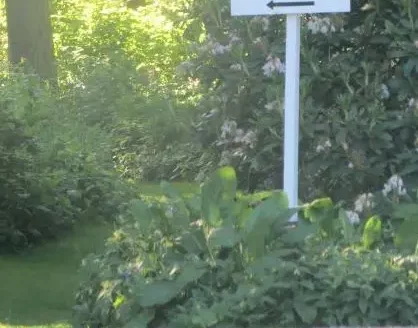
The woodland walk is well signposted and approximately a mile long, It has trees of all ages, rich in native species. During the summer, the woodland floor is alive with wildflowers, birds and insects.
Keep an eye out for red squirrels and roe deer. Small resident populations make their home in the woods at Dunninald, and patient visitors are sometimes rewarded.
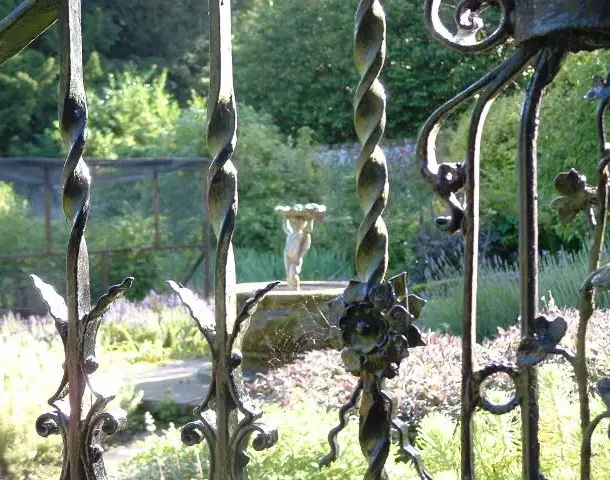
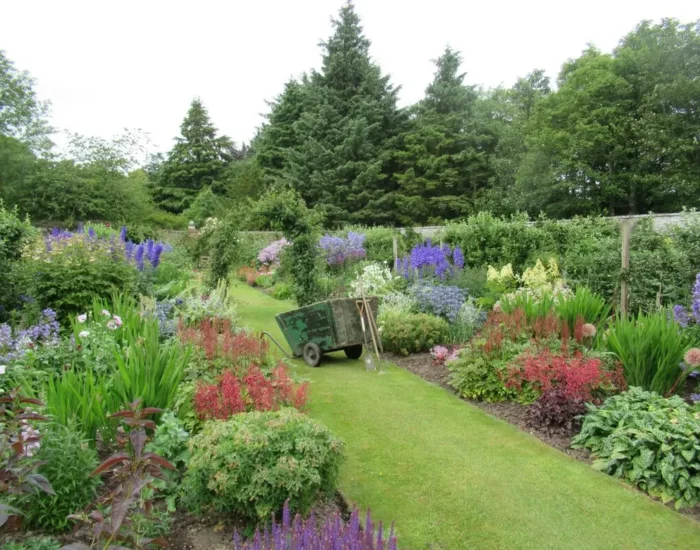
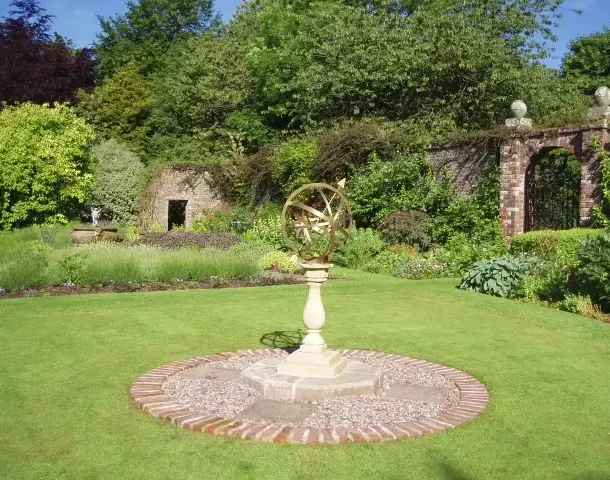
A highlight of any visit to Dunninald is the Walled Garden. It is a short walk from the house down the beech avenue. Enter through the Union Gate, made by Browns of Montrose in 1907. Worked into the ironwork are roses, thistles, daffodils and shamrocks, which represent each of the four home nations.
The garden is sheltered to the north by a curved wall and mature trees and has a gentle south-facing slope. The combination creates a remarkably warm microclimate with an occasional hint of humid sea air.
Originally planted to supply the household with vegetables, fruit and cut flowers, the garden has evolved in recent years. The centre is now dominated by a double herbaceous border with rose arches, and mixed borders run along the walls. Vegetables, soft fruits and a greenhouse remain, and on open days plants, fruit and vegetables are available for sale.
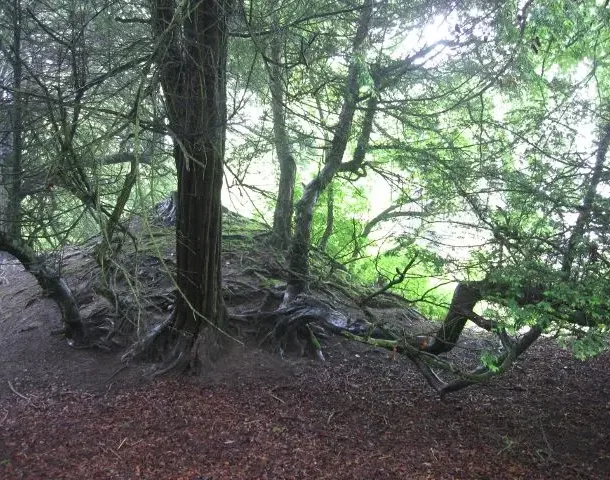
The west gate opens towards the site of the second Dunninald. From here, you can return to the castle by the south drive. Alternatively, you can walk under the yew trees and up the beech avenue. The adventurous can extend their walk by exploring the Wood Path, a circular woodland route of approximately one mile.